Five whisky regions, one stubbornly useful guide.
Scotch regions are not magic weather stamps. They are history, transport, raw materials, distillery choices, cask access and law, all wearing tartan trousers when marketing arrives. This guide keeps the trousers, but checks the seams.
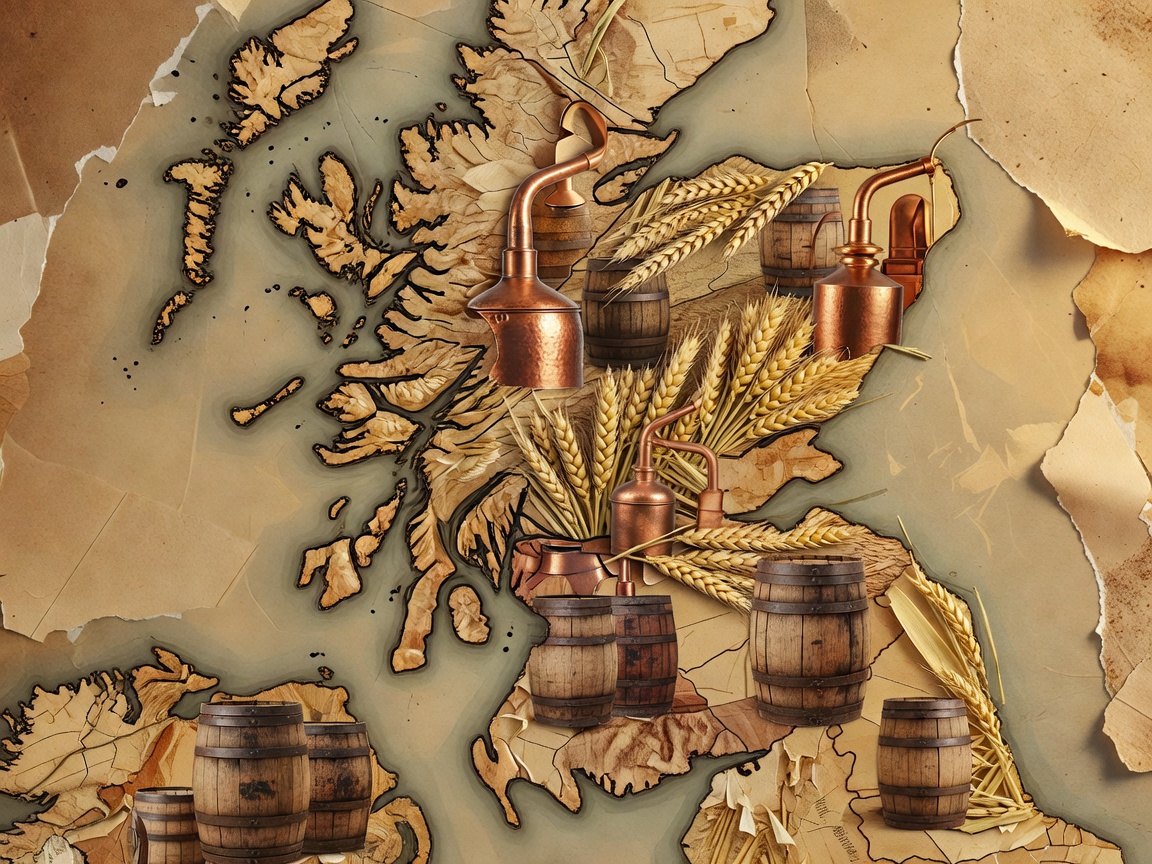
Pick a region. Blame the cask later.
 01
Speyside
Dense distillery country, fruity distillate and the polite chaos of sherry-seasoned oak.
Read Speyside 02
Islay
Peat, maritime maturation and the famous trick of tasting larger than the island.
Read Islay 03
Highlands
Less a flavour box than a large argumentative family with coastal, inland and island cousins.
Read Highlands 04
Lowlands
Grass, cereal, citrus and lightness, though the old soft-shoe stereotype is not always invited.
Read Lowlands 05
Campbeltown
A small region with muscular character: oil, brine, fruit, smoke and a useful refusal to behave.
Read CampbeltownWhat a region can tell you
A Scotch region can hint at style because distilleries in the same place often share history: access to peat or coal, the size of stills, trade routes for casks, local water sources, floor malting habits, warehouse climate and what drinkers came to expect. It can also mislead, because distillers are not legally required to make a flavour that suits the postcard.
So the sensible reader uses region as a first clue. Then comes production: malt specification, fermentation length, still shape, cut points and filling strength. Then maturation takes the wheel, waves cheerfully, and drives through ex-bourbon barrels, sherry-seasoned butts, refill hogsheads and whatever finishing cask the label coyly mentions.
How to read the label without sighing
Start with the region and distillery name, then check whether the bottle is single malt, blended malt, blended Scotch, single grain or blended grain. Age statements refer to the youngest whisky in the bottle. “Natural colour” and “non-chill filtered” tell you about presentation, not automatic quality. Cask descriptions deserve attention: first-fill bourbon and refill sherry do different jobs, and a finish is not the same as full-term maturation.
If a label shouts “coastal”, “smooth” or “rare”, remain seated. Look for concrete details instead. Scotch whisky has enough real structure to discuss; it does not need fog machines.