The region that refuses to fit in its own drawer.
The Highlands is the broadest Scotch whisky region, and it behaves accordingly: coastal salinity, waxy northern weight, heathered malt, rich sherry styles, gentle fruit, island smoke and a few personalities best approached with a chair and a notebook. Calling it one flavour profile is tidy. Tidy is not always honest.
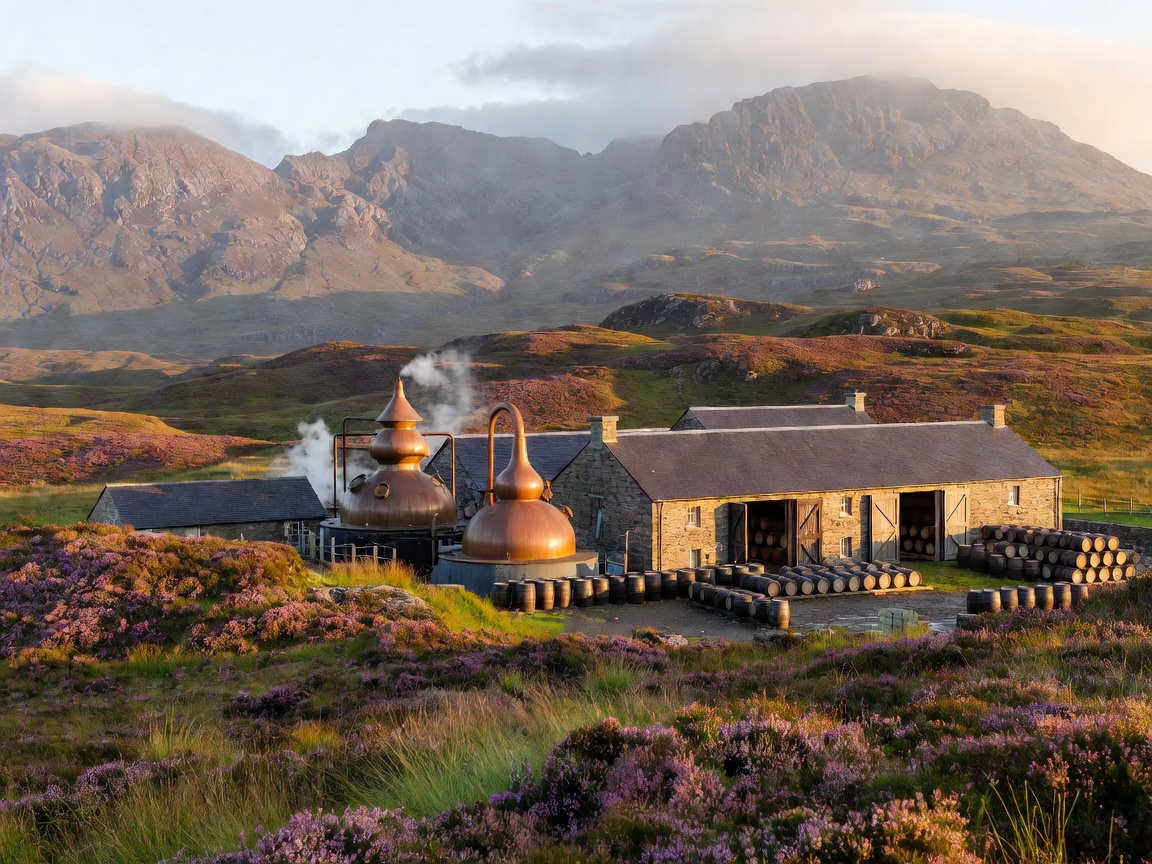
Why is Highland character so varied?
The region covers a large geographic spread and includes distilleries with very different histories. Some were shaped by remote farming and small-scale malt production; others by blending demand, ports, railways and the needs of larger owners. Island distilleries outside Islay are commonly grouped within the Highland region for Scotch whisky purposes, which adds maritime and peated styles to an already broad category. This is how a simple regional guide becomes a family tree with opinions.
It is useful to think in zones without pretending they are official flavour laws. Northern Highland malts may show wax, citrus, cereal and firm structure. Western coastal and island malts may bring smoke, brine, pepper and rugged fruit. Eastern styles can be nutty, malty or sherried. Southern Highland examples often lean towards honey, heather, soft fruit and lighter texture. Any distillery can depart from these patterns through peat level, fermentation, still design and cask policy.
What production choices matter most?
Highland spirit character is often best understood through weight. Some distilleries produce waxy or oily new make, where long-chain compounds survive distillation and give texture. Others make clean, fruity spirit with high copper contact and precise cuts. Peated Highland malts can be earthy, heathery, peppery or coastal rather than medicinal in the classic Islay sense. The difference is partly peat source and partly how the smoke interacts with the base spirit.
Fermentation can steer the flavour towards cereal, apple, tropical fruit, lactic notes or spice. Wooden washbacks may encourage a different microbial environment from stainless steel, though the impact depends on cleaning, process and time. Still shape and lyne arm angle influence reflux: more reflux generally means lighter spirit; less reflux can mean more weight. Direct comparison between distilleries is difficult because every variable arrives with friends. Whisky production is not a neat spreadsheet, despite valiant efforts by people with excellent stationery.
How does maturation differ across the Highlands?
Highland maturation is as varied as production. Ex-bourbon casks can emphasise vanilla, lemon, honey and coconut, useful for waxy or citrus-led spirits. Sherry-seasoned casks add dried fruit, spice, walnut, chocolate and sometimes sulphury savoury depth. Refill casks are valuable for heavier spirits, allowing texture, malt and coastal notes to stay visible. Active first-fill oak can flatter a light spirit but flatten a complex one if used without restraint.
Coastal warehouses may support impressions of brine, damp stone and salt, especially in spirit already inclined that way. Inland maturation can feel drier or fruitier depending on cask and warehouse conditions. Yet cask history is still the large print. If a Highland label offers only “matured by mountain air”, it has chosen poetry over evidence. Poetry is welcome; buying decisions should not be made by haiku alone.
How should you read a Highland label?
First, check whether the whisky is a mainland Highland malt or an island malt placed within the Highland category. Island names such as Skye, Orkney, Mull, Jura or Arran can tell you more than the broad regional term, though they still do not guarantee flavour. Next, look for peat references. A Highland whisky may be unpeated, lightly peated or boldly smoky. The label should make this plain if smoke is a defining feature.
Cask wording is especially important. A Highland malt in refill American oak may show distillery character clearly: wax, citrus, barley, mineral notes or heather. A heavily sherried release may move towards raisins, chocolate and spice regardless of region. Wine finishes can add colour and tannin, sometimes attractively, sometimes as if the whisky has borrowed a coat in the wrong size. Age statements, where present, help you judge oak integration, but they are not quality scores. Younger Highland malts can be vivid and structured; older ones can be graceful or tired, depending on the cask.
How does the Highlands compare?
Compared with Speyside, the Highlands generally offer a wider range of textures and peating levels. Compared with Islay, peat is usually less uniformly central, though some Highland and island malts can be very smoky. Compared with the Lowlands, Highland whiskies often show more weight, oak depth and savoury structure. Compared with Campbeltown, the Highlands are broader and less tied to oily, briny signatures.
Useful approach: Do not buy “Highland” as a flavour promise. Read the distillery, island or locality, peat indication, cask type and presentation details. The region is a map pin, not a tasting note with boots on.