Small region, big shoulders, faint smell of engine room.
Campbeltown is the smallest of the recognised Scotch whisky regions by active distillery count, but it carries an outsized reputation. The usual notes are oil, brine, smoke, fruit, leather, mineral dryness and a savoury funk that polite tasting sheets call “complex”. Less polite sheets have better adjectives, but we shall behave.
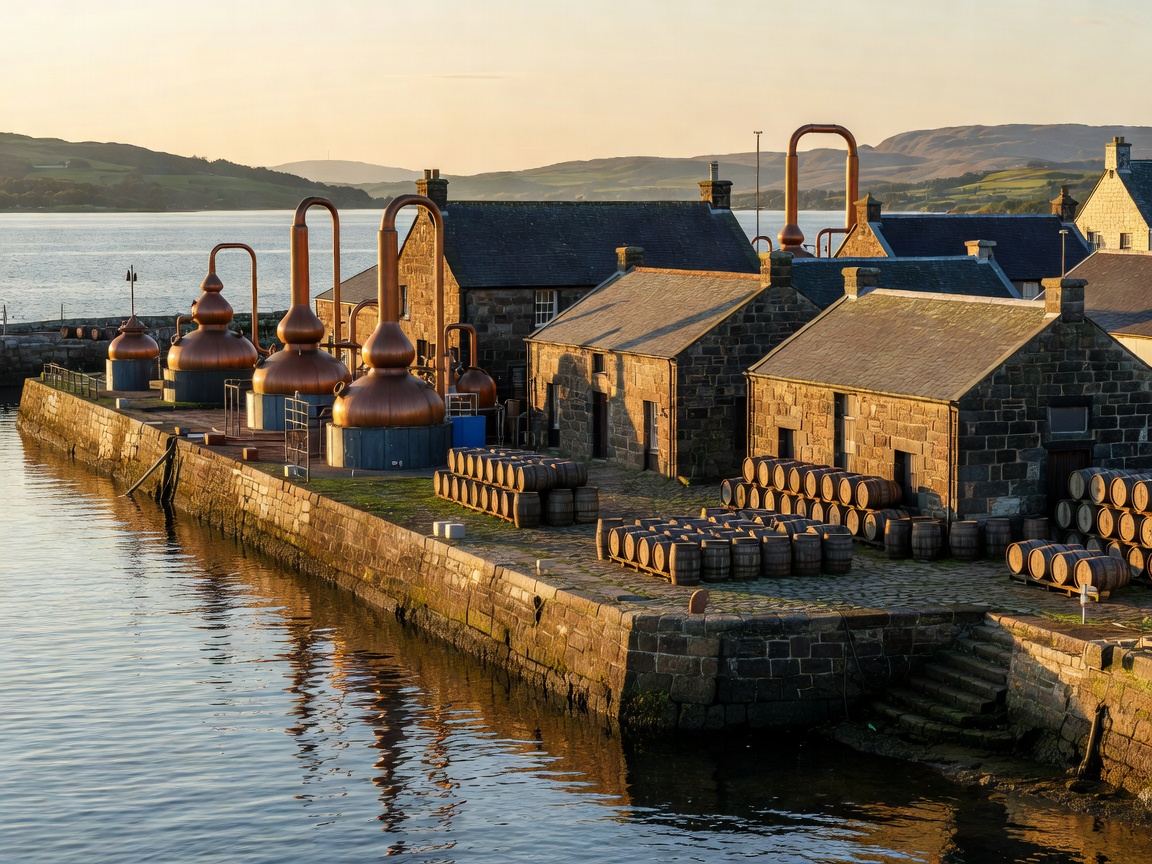
How did Campbeltown character develop?
Campbeltown’s whisky identity grew from its harbour, trading links, local demand and a once-heavy concentration of distilling. The town’s location on the Kintyre peninsula made it a practical whisky port, while distillery practice developed a muscular style suited to blending and local taste. The region later contracted sharply, but its surviving reputation did not become dainty. If anything, scarcity made the character easier to mythologise, which whisky people do with the discipline of nesting seabirds.
Modern Campbeltown whisky is not a museum exhibit. It includes different peat levels, cask regimes and house styles. Still, the shared regional impression often includes weight and savoury depth. Brine and coastal notes may come from a mix of spirit character, cask maturation and expectation. Oiliness is more directly tied to production: fermentation profile, distillation regime, cut points and condenser influence can all retain heavier compounds.
What shapes the spirit?
Campbeltown malts are often discussed in terms of texture. Oily spirit feels coating and persistent, carrying flavours across the palate rather than flashing and vanishing. That can come from heavier distillation, broader cuts and lower levels of copper-driven purification. Peat may be present, but it is not always the medicinal peat associated with many Islay whiskies. It can be earthy, sooty, mineral or background smoky, giving structure rather than full theatre.
Fermentation can add fruit and savoury complexity. Apple, lemon, tropical hints, malt, yeastiness and lactic notes may sit alongside smoke and brine. If sulphury or meaty notes appear, they can be part of the charm when integrated; when not integrated, they can resemble a cupboard that has made poor life choices. The line between character and flaw is partly concentration, partly cask support, and partly the drinker’s tolerance for mischief.
How does maturation work here?
Campbeltown spirit often benefits from casks that add shape without sanding off its elbows. Refill bourbon casks can show oil, mineral notes, citrus and gentle smoke. First-fill bourbon can bring vanilla and sweetness, useful when the spirit is austere. Sherry-seasoned casks add dried fruit, leather, spice and chocolate, often pairing well with the region’s savoury weight. Too much active oak, however, risks turning distinctive spirit into generic richness with a harbour postcard glued on.
Because Campbeltown whiskies can have strong distillery character, vatting is crucial. A combination of bourbon, sherry and refill casks can balance brightness, depth and restraint. Wine finishes may add fruit or tannin, but the region’s oily and briny profile does not automatically flatter every finish. A label that states cask mix is therefore unusually helpful. “Matured in the finest oak” is less helpful, unless your hobby is admiring confidence.
How should you read a Campbeltown label?
Check the category first: most regional discussion concerns single malt, but the Scotch category on the label is the legal anchor. Then look at peat indication. Some Campbeltown releases are unpeated or lightly peated; others carry more smoke. Next, examine cask description. Refill, bourbon, sherry and wine cask information tells you whether to expect distillery-led oil and brine, sweet oak, dried fruit or finishing influence. Bottling strength can matter because heavier spirit often shows well with less dilution, but strength alone is not a moral achievement.
Age statements should be read with cask type. A younger whisky from active wood can taste mature in oak terms while still showing lively spirit. An older refill-matured whisky may offer more integrated savoury depth. Non-chill filtration is often valued by enthusiasts because it can preserve texture, though it may cause haze when water or cold enters the glass. Natural colour indicates that caramel colouring has not been added; useful information, not a halo.
How does Campbeltown compare?
Compared with Islay, Campbeltown smoke is often less medicinal and more oily or mineral, though there is overlap. Compared with Speyside, it is usually less polished and more savoury. Compared with the Highlands, it is narrower in geography but more recognisable when the oily-briny signature appears. Compared with the Lowlands, it is heavier, darker and less interested in being charming before lunch.
Best use of the region: Campbeltown is excellent for learning texture. Notice how oil, brine, smoke and fruit sit together, then ask whether the cask supports them or simply paints over them with raisins. Raisins have had enough unearned power.