Peat smoke, sea air and labels with a taste for theatre.
Islay is the whisky region most likely to be treated as a personality test. Smoke lovers nod solemnly; everyone else is handed a glass that smells like a bonfire arguing with iodine. The truth is better: peat is central for many Islay malts, but the island’s styles are not one large ashtray.
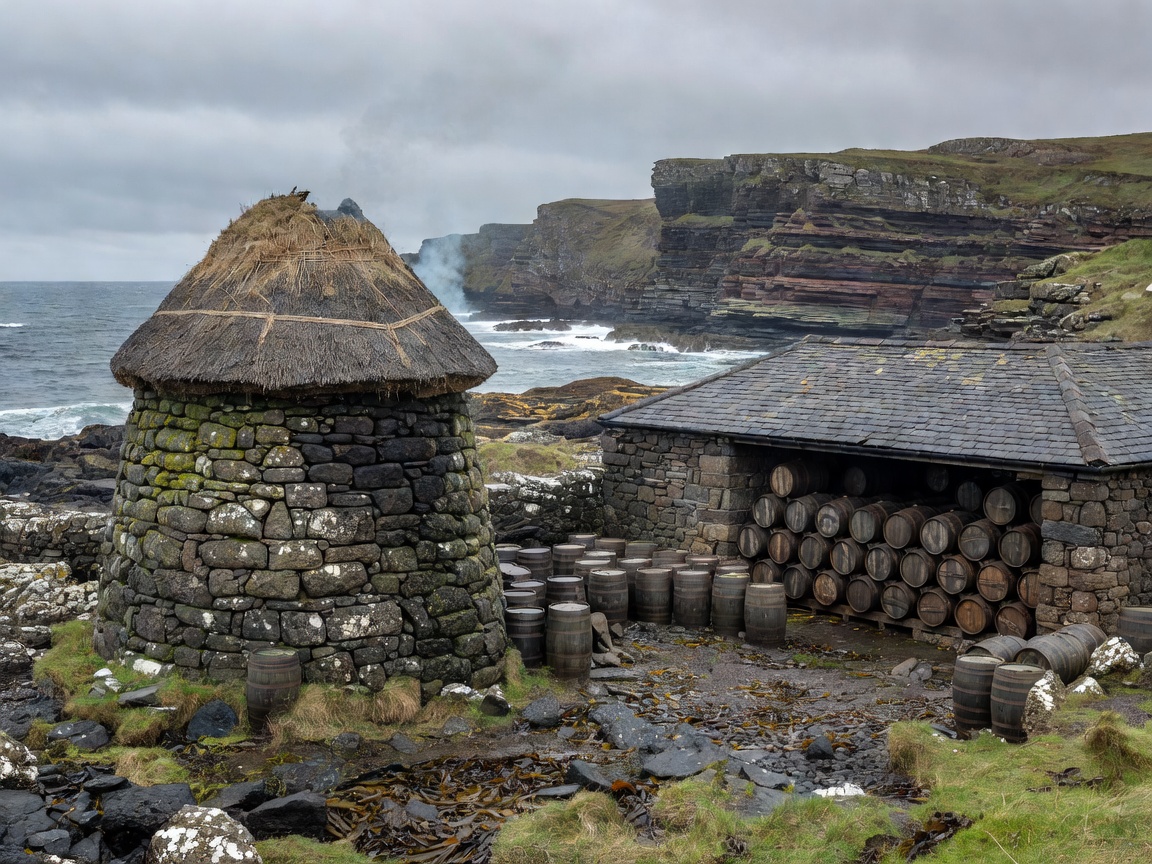
How did Islay character develop?
Islay’s reputation rests on peat, maritime trade and a long-standing appetite for powerful spirit. Peat was a practical fuel, and drying malt over peat smoke left phenolic compounds that translate into aromas often described as smoke, tar, medicinal notes, seaweed, ash, kippers, antiseptic or earthy sweetness. Charming dinner conversation, naturally. Distilleries used what was available, and drinkers later turned that necessity into identity.
The island location also shaped production and maturation. Casks travelled by sea, warehouses sat close to salty air, and distilleries developed styles that could survive blending and long transport. “Maritime” is not a legal flavour term, and whisky does not simply drink seawater through the warehouse walls. Still, coastal maturation can encourage a perception of brine and mineral dryness, especially when the spirit already carries smoke, seaweed-like phenols and firm oak tannin.
What makes Islay peat taste different?
Peat character depends on the peat source, the cut of the peat, moisture, kiln practice and the level of phenols in malt. Phenol readings are usually measured in parts per million in the malt before fermentation, not in the finished whisky. That distinction matters. Fermentation, distillation and maturation can reduce, transform or redirect smoky intensity. A whisky made from highly peated malt may taste surprisingly integrated after long maturation; a younger whisky with lower malt phenols can feel fierce if the cask leaves it exposed.
Medicinal smoke, ashy smoke and earthy smoke are not identical. Heavy peat can be clean and precise, or oily and tarry. Lighter peat can sit behind lemon, vanilla and cereal. Some Islay whiskies are unpeated or only lightly peated, because distilleries do not exist merely to satisfy internet arguments. When a label states “heavily peated”, expect smoke to be important, but still look for cask type, age statement and bottling strength before deciding what kind of smoke is likely.
How production choices change the result
Fermentation length influences whether smoke sits with fruit or dominates a leaner spirit. Longer fermentation may build tropical or citrus esters, which can make peat feel brighter and more aromatic. Shorter or more efficiency-led fermentation can leave a firmer cereal base. Still size and shape then decide weight. A robust spirit cut can retain oily compounds that carry smoke deeply; a cleaner cut can give sharp, coastal clarity. Condenser type also matters, particularly where worm tubs or less copper contact preserve sulphury, meaty or weighty notes.
Islay’s smoky malts often perform well at higher bottling strengths because peat, oil and oak can carry alcohol. That is not an instruction to buy by strength alone. High strength can reveal texture and concentration; it can also reveal rough edges, rather like bright lighting in a budget hotel bathroom.
What does cask policy do on Islay?
Ex-bourbon barrels are common and often excellent for peated spirit. Vanilla, lemon, coconut and honey can lift smoke rather than smother it. Refill casks can be especially revealing: less oak sweetness, more distillery character, more tar, brine and cereal. Sherry-seasoned casks bring dried fruit, spice, chocolate and walnut, creating the much-loved smoke-and-raisin effect. It can be magnificent; it can also become a fruitcake dropped into a chimney.
Wine cask finishes are more divisive. Peat and red wine can produce berry, tannin and barbecue notes, but balance is difficult. Sweet wine finishes may round the edges and add marmalade or treacle. When reading labels, distinguish full maturation from finishing. A short finish can season the surface; full-term maturation builds structure from the start. “Cask strength” means bottled without dilution to a standard lower strength, though water may have been used before filling casks depending on production practice.
How should you compare Islay with other regions?
Against Speyside, Islay usually foregrounds peat and maritime savoury notes where Speyside often leans to orchard fruit and polished oak. Against the Highlands, Islay is narrower geographically but more strongly associated with a shared smoky image. Against Campbeltown, it can be more medicinal or ashy, while Campbeltown often brings oily, industrial and briny weight. These are tendencies, not commandments etched into a warehouse door.
Label clue: If an Islay whisky names peat level, cask type, age and filtration choices, you have something to work with. If it mostly says “storm”, “legend” and “untamed”, congratulations: you own an adjective farm.